Choosing the Right Method for Your Project
In the world of advertising, publicity, and beyond, the tactile experience of print remains a powerful tool. From crisp business cards to vibrant brochures and eye-catching packaging, print helps brands connect with their audience in a tangible way. But what goes on behind the scenes to bring these designs to life? The answer lies in understanding the diverse landscape of print technologies.
Choosing the right printing method is crucial for achieving desired results, managing costs, and ensuring quality. Here’s a breakdown of the most common print technologies and when to consider each:
1. Offset Printing (Lithography)
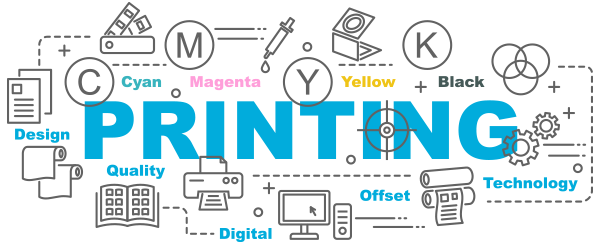
How it works: Offset printing is a traditional method that relies on the principle that oil and water don’t mix. An image is first transferred from a printing plate (often aluminum) to a rubber “blanket” cylinder and then “offset” onto the paper. Non-image areas on the plate attract water, repelling the oil-based ink, while image areas attract ink. This indirect transfer process protects the plate and allows for high-quality, consistent results. For color printing, separate plates are made for each of the four process colors: cyan, magenta, yellow, and black (CMYK).
Advantages:
- Superior Image Quality: Known for sharp details, vibrant colors, and consistent color reproduction, making it ideal for high-end publications and marketing materials.
- Cost-Effective for Large Runs: Once setup is complete, the cost per unit significantly decreases with higher volumes, making it economical for thousands or even millions of prints.
- Versatility: Can print on a wide range of paper stocks, from thin newsprint to thick cardstock, and even on various other materials like plastic and metal.
- Specialty Inks: Allows for the use of Pantone spot colors, metallic inks, and other specialty finishes for enhanced visual impact.
Best for magazines, newspapers, books, brochures, direct mail, stationery, high-volume marketing collateral, and packaging where consistent color and high quality are paramount.
2. Digital Printing
How it works: Digital printing directly transfers digital-based images from a computer file to a printing surface without the need for plates. This technology primarily uses either toner (like laser printers) or liquid ink (inkjet printers).
Advantages:
- Fast Turnaround: Eliminates the need for plate creation and setup, allowing for quick production, especially for smaller quantities.
- Cost-Effective for Short Runs: The absence of setup costs makes it highly economical for small print jobs, on-demand printing, and prototypes.
- Variable Data Printing: Enables personalization of each printed piece with unique text, images, or graphics, perfect for direct mail campaigns and customized marketing.
- Flexibility: Easily accommodates last-minute design changes and short-run testing.
Best for: business cards, flyers, posters, personalized mailers, short-run books, custom packaging, and any project requiring quick production or variable data.
3. Flexographic Printing (Flexo)
How it works: Flexography uses flexible relief plates, typically made of photopolymer or rubber. These raised images on the plates transfer ink directly to the substrate. It’s a high-speed rotary printing method.
Advantages:
- Versatility of Substrates: Can print on almost any material, including non-porous surfaces like plastics, foils, and films, as well as paper and corrugated cardboard.
- High Speed & Large Volumes: Extremely efficient for long print runs, especially for continuous patterns.
- Durability: Inks often dry quickly and are durable, making them suitable for packaging that needs to withstand handling.
Best for: Product packaging (flexible packaging, labels, cartons), corrugated boxes, newspapers, and gift wrap.
4. Gravure Printing (Rotogravure)
How it works: Gravure printing involves engraving the image onto a metal cylinder. Tiny cells or wells are etched into the cylinder, holding the ink. As the cylinder rotates, it picks up ink, and excess ink is wiped away by a doctor blade. Pressure then transfers the ink from the cells directly to the substrate.
Advantages:
- Exceptional Image Quality for Long Runs: Known for producing highly detailed, vibrant, and consistent images, especially with continuous tones.
- High Speed: Ideal for extremely long print runs, offering excellent efficiency.
- Durability of Cylinders: The engraved cylinders are highly durable, making them suitable for millions of impressions without degradation.
Best for high-volume magazines, catalogs, product packaging (especially for food and beverages), wallpapers, and decorative laminates where superior image quality and long runs are required.
5. Screen Printing
How it works: Screen printing uses a mesh screen stretched over a frame. A stencil is created on the screen, blocking ink from passing through certain areas. Ink is then pushed through the open areas of the mesh onto the substrate using a squeegee. Each color requires a separate screen.
Advantages:
- Vibrant and Opaque Colors: Capable of laying down a thick layer of ink, resulting in exceptionally vivid and opaque colors, even on dark substrates.
- Versatility of Substrates: Can print on almost any material, including textiles, plastics, glass, metal, wood, and irregularly shaped objects.
- Durability: Prints are often highly durable and resistant to fading and abrasion.
- Specialty Inks: Can use a wide variety of specialty inks, including metallic, glitter, glow-in-the-dark, and textured inks.
Best for: T-shirts and apparel, promotional items, signage, posters, art prints, industrial applications, and unique textures.
Choosing the Right Technology
The “best” printing technology isn’t a one-size-fits-all answer. It depends entirely on your project’s specific needs.
- Quantity: Small runs favor digital; large runs favor offset, flexo, or gravure.
- Budget: Digital has lower initial costs; traditional methods become more cost-effective per unit at higher volumes.
- Material: Some methods are more versatile across different substrates.
- Quality & Detail: Offset and gravure excel in fine detail and color consistency.
- Turnaround Time: Digital offers the fastest turnaround.
- Customization: Digital is unparalleled for variable data and personalization.
- Special Finishes: Consider which methods support embellishments like spot UV, embossing, or foiling.
At Ewan Printing, we leverage a range of these technologies to ensure your vision is brought to life with precision and impact. By understanding these fundamental print methods, you’re better equipped to make informed decisions and achieve outstanding results for all your advertising, publicity, and printing needs.
The most trusted and quality printing company, with excellent customer service. Best Quality Printing in Dubai
WhatsApp/Call us:
Arabic: 055 5771552
Arabic & English: 056 5071752 – (Send Query) https://wa.me/message/ZCPEMGR67ZD6G1
English | Urdu | Hindi: 050 508 6855
Email: printingewan@gmail.com
Location: Shop 26 and 28, Al Nasiriya Building, 247 Damascus Street, Al Qusais Industrial Area 1, Dubai, UAE
Leave a Reply