

The Unfolding Scroll: A Journey Through the Evolution of Print
From ancient impressions on clay to the marvels of 3D printing, the story of print is a testament to human ingenuity and our unquenchable thirst for communication. More than just a technological progression, the evolution of print has been a powerful catalyst for societal change, democratizing knowledge, fueling revolutions, and shaping the very fabric of civilization.
Early Impressions: The Dawn of Replication
The roots of printing stretch back millennia. Long before the widespread adoption of paper, early civilizations utilized rudimentary forms of replication. Cylinder seals, used in Mesopotamia as early as the 4th millennium BCE, created repeatable impressions on clay tablets for authentication. Ancient Egyptians developed black ink and used reeds to brush onto papyrus, while in China, the practice of ink rubbing from stone inscriptions emerged around the 6th century.
A significant leap came with woodblock printing, which originated in China during the Tang Dynasty (618-907 CE). This method involved carving text and images onto wooden blocks, inking them, and then pressing them onto paper or fabric. The Diamond Sutra, printed in China in 868 CE, stands as the earliest known dated printed book, showcasing the sophistication of this early technology.
The Movable Type Revolution: A Paradigm Shift
While woodblock printing was effective, it was labor-intensive for producing diverse texts. The true game-changer arrived in 11th-century China with the invention of movable type by Bi Sheng. Initially using ceramic, and later wooden and metal types, this innovation allowed individual characters to be arranged, inked, and reused, drastically increasing efficiency. Though its widespread adoption in China was somewhat limited by the complexity of the Chinese character set, its principles laid the groundwork for future developments.
The concept of movable type eventually made its way to Europe, where, in the mid-15th century, Johannes Gutenberg revolutionized the Western world with his printing press. Gutenberg’s invention, combining movable metal type with a screw press and oil-based ink, ushered in an era of mass communication. The Gutenberg Bible, completed around 1455, stands as an iconic symbol of this pivotal moment, marking the beginning of the “Age of the Printed Book” in the West.
The Printing Press and its Profound Impact
Gutenberg’s press was more than just a machine; it was an engine of change:
- Democratization of Knowledge: Books, once expensive, hand-copied luxuries accessible only to the elite, became more affordable and widely available. This fueled a surge in literacy and allowed knowledge to spread beyond monastic walls and aristocratic libraries.
- Religious Reformation: The printing press played a crucial role in the Protestant Reformation, enabling Martin Luther’s “Ninety-five Theses” and other reformist ideas to disseminate rapidly across Europe, challenging established religious authority.
- Scientific Advancement: Scientists and scholars could now share their discoveries and theories more easily, fostering collaboration and accelerating the pace of scientific inquiry.
- Rise of Vernacular Languages: As books became more accessible, there was a shift from Latin to local languages, contributing to the standardization of grammar and spelling, and the formation of national identities.
- Birth of Mass Media: The ability to rapidly produce multiple copies led to the emergence of newspapers, pamphlets, and other forms of mass communication, laying the foundation for modern journalism and public discourse.
Industrialization and Beyond: Speed and Specialization
The centuries following Gutenberg saw continuous innovation in printing:
- Lithography (late 18th century): Invented by Alois Senefelder, this chemical printing process allowed for greater artistic freedom and the reproduction of more intricate images.
- The Rotary Press (19th century): Richard March Hoe’s invention of the rotary press significantly increased printing speed by using cylinders to print continuously fed paper, making large-scale newspaper production possible.
- Offset Printing (early 20th century): Building on lithography, offset printing became the dominant method for commercial printing, offering high quality and efficiency for large runs.
- Screen Printing (early 20th century, popularized commercially): Though originating in China during the Song Dynasty, screen printing gained widespread commercial use in the West, enabling vibrant prints on various surfaces, especially textiles.
- Photocopying and Laser Printing (mid to late 20th century): Chester Carlson’s invention of xerography (photocopying) in 1938 and Gary Starkweather’s development of the laser printer at Xerox in 1969 brought efficient, high-quality printing into offices and homes.
- Inkjet Printing (mid 20th century onwards): This technology, which propels tiny droplets of ink onto paper, became ubiquitous for personal and small-scale printing, offering color capabilities at an affordable price.
The Digital Age and the Future of Print
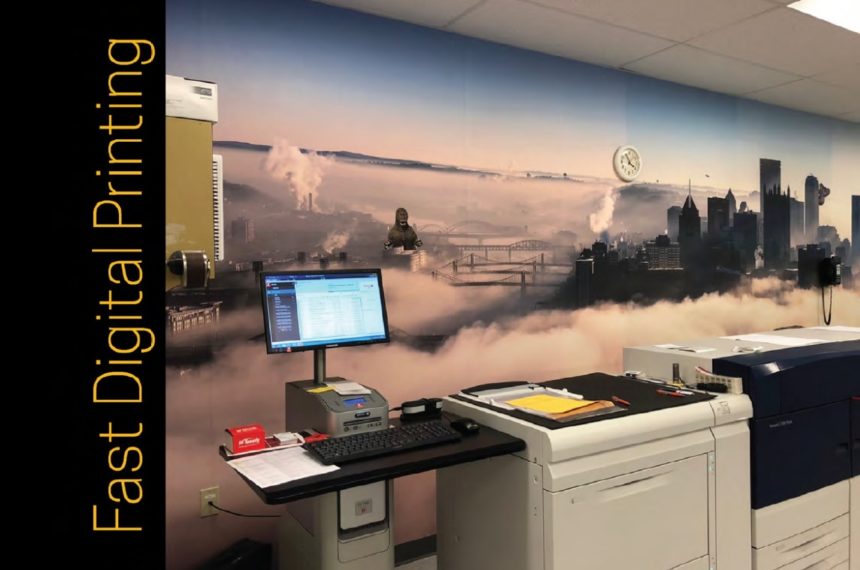
The late 20th and early 21st centuries have ushered in the digital printing era, where images are transferred directly from digital files to the printing surface, bypassing traditional plates and films. This has revolutionized personalized printing, print-on-demand services, and offers immense flexibility and cost-effectiveness for short runs.
Looking ahead, the evolution of print continues at a breathtaking pace:
- 3D Printing (Additive Manufacturing): This groundbreaking technology is transforming manufacturing, enabling the creation of three-dimensional objects layer by layer from digital designs, with applications spanning medicine, aerospace, and construction.
- Sustainable Printing: As environmental concerns grow, the industry is increasingly focused on eco-friendly inks, recycled materials, and waste reduction practices.
- Personalization and Variable Data Printing: Leveraging digital capabilities, print is becoming highly customized, with personalized marketing materials, packaging, and even books tailored to individual preferences.
- Integration with Digital Experiences: Augmented Reality (AR) embedded in printed materials is bridging the gap between physical and digital, offering interactive experiences through QR codes and other digital triggers.
- Automation and AI: Artificial intelligence and automation are optimizing print workflows, from design creation and job management to predictive maintenance, enhancing efficiency and product quality.
From the first seal pressed into clay to the intricate designs emerging from a 3D printer, print has always been about making the unseen visible, the fleeting permanent, and the unique replicable. Its journey is far from over, promising exciting new frontiers as technology continues to converge and innovate, ensuring that the power of print remains an indispensable force in our increasingly connected world.
The most trusted and quality printing company, with excellent customer service. Best Quality Printing in Dubai
#EWANPRINTING
WhatsApp/Call us:
Arabic: 055 5771552
Arabic & English: 056 5071752 – (Send Query) https://wa.me/message/ZCPEMGR67ZD6G1
English | Urdu | Hindi: 050 508 6855
For latest offers
Email: printingewan@gmail.com
Location: Shop 26 and 28, Al Nasiriya Building, 247 Damascus Street, Al Qusais Industrial Area 1, Dubai, UAE
Leave a Reply